
Repurposing Concrete Hollow Blocks in Modern Architecture
Key Takeaways
- Sustainability & Efficiency: Repurposing unused concrete hollow blocks significantly reduces construction waste and lowers carbon emissions associated with new manufacturing.
- Versatile Uses of Hollow Blocks: From minimalist breeze block facades that enhance natural ventilation to geometric planters and outdoor furniture, these materials offer highly functional design solutions.
- Modern Architecture Appeal: Utilizing these blocks aligns with a clean, industrial aesthetic, providing both privacy and visual connectivity without adding unnecessary visual clutter.
The Role of Hollow Blocks in Sustainable Modern Architecture
Sustainability is an absolute necessity in modern architecture. Rather, it is a responsibility we must fulfill to ensure the security of our future generations. The concrete hollow block is often overlooked on construction sites, despite its versatility. Concrete Hollow Blocks have great potential for reuse, but are often unceremoniously dumped due to minor flaws or project changes. Reusing or repurposing unused Concrete Hollow Blocks reduces construction waste and opens the doors to cost-effective & innovative design solutions.
8 Innovative Uses of Hollow Blocks
1. Versatile & Structurally Strong
Concrete Hollow Blocks are durable, weather-resistant, and modular in nature. The uniformity of these shapes allows architects and designers to experiment with patterns, textures, and structural forms while maintaining stability.
2. Working Towards Sustainability
When raw materials are reused, the demand for new production is reduced significantly. This lowers carbon emissions related to manufacturing and transportation. In countries like Bangladesh, where rapid urbanization is a common occurrence, this approach is perfectly aligned with eco-conscious development goals.
3. Cost Efficiency
When used for landscaping, boundary elements, and non-load-bearing structures, repurposed materials can dramatically cut costs. What would ordinarily be dumped as waste could potentially become a valuable design asset.
4. Decorative Facades & Screens
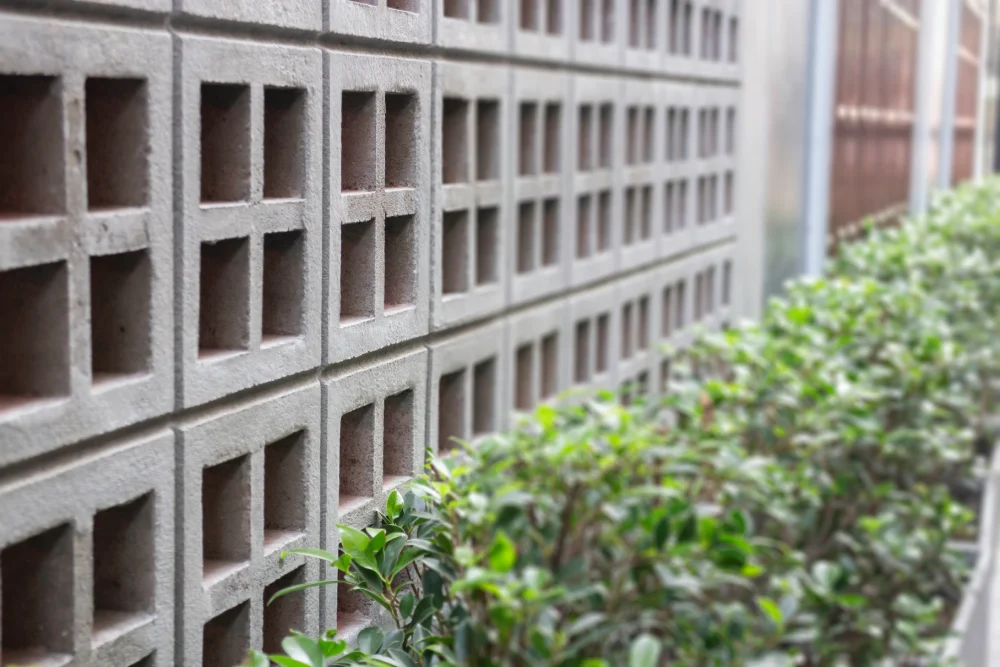
Unused Concrete Hollow Blocks can be arranged into perforated walls or “breeze block” facades. These can be used to visually create appealing geometric patterns and enhance natural ventilation and light filtration—ideal for tropical climates.
5. Planters & Vertical Gardens
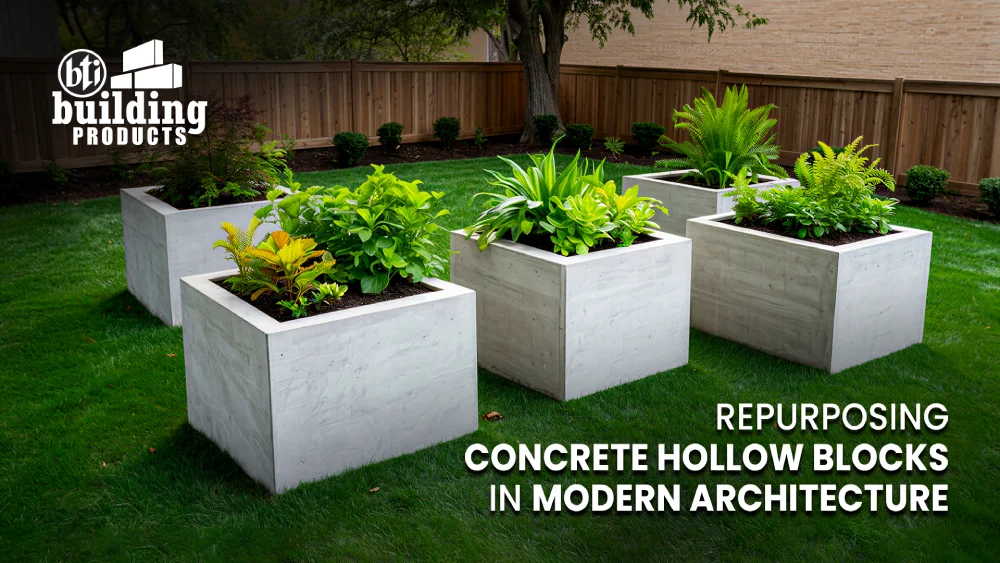
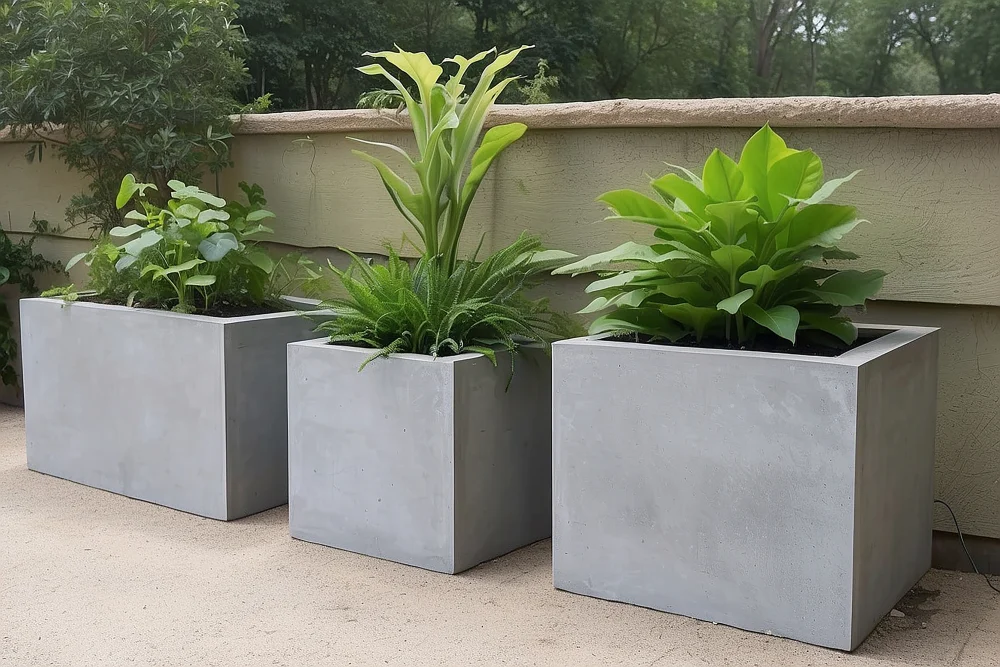
Stacked creatively, Concrete Hollow Blocks can be transformed into modular planters. Their cavities are great for growing herbs, succulents, or small plants, making them ideal for urban gardening and balcony landscapes.
6. Outdoor Installations & Furniture
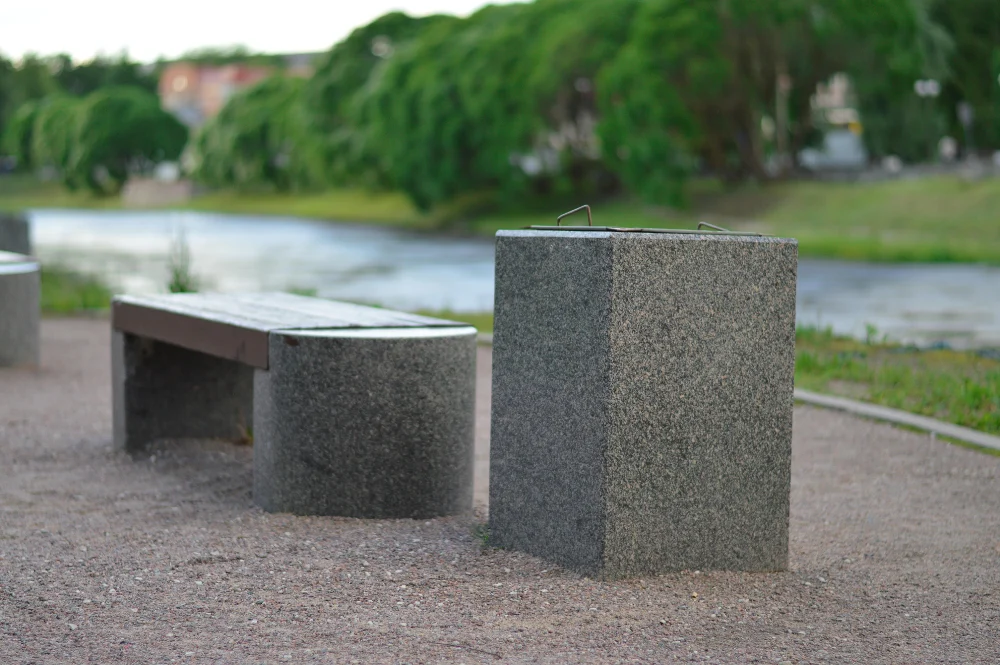
From minimalist benches to coffee tables, Concrete Hollow Blocks can be paired with wood or metal to create functional outdoor furniture. Their industrial aesthetic complements modern design styles.
7. Partitioning & Boundary Walls
Repurposed Concrete Hollow Blocks can be used to construct partially open partitions or boundary walls. These provide privacy while maintaining airflow and visual connectivity—perfect for courtyards and terraces.
8. Considerations from a Design Perspective
When reusing Concrete Hollow Blocks, make sure that they do not have major flaws or damage, especially if being used in a load-bearing capacity. Concrete Hollow Blocks can be finished in many different ways to change up the look & feel. The orientation can be changed to create dynamic patterns. Glass, wood, or steel can be used to create a contemporary aesthetic.
Repurposing Concrete Hollow Blocks is a step toward circular architecture, where materials are continuously reused instead of being. This approach not only minimizes environmental impact but also encourages designers to think creatively within constraints.
In a world where resources are finite, the future of architecture lies in reimagining what we already have. Hollow blocks, once considered surplus, can now become building blocks of innovation—both literally and conceptually.
Modern architecture thrives at the intersection of creativity and responsibility. By repurposing unused hollow blocks, architects and homeowners alike can contribute to a more sustainable future while crafting spaces that are both functional and aesthetically compelling.
Sometimes, the most extraordinary designs begin with the most ordinary materials—waiting to be seen differently.